
Elements
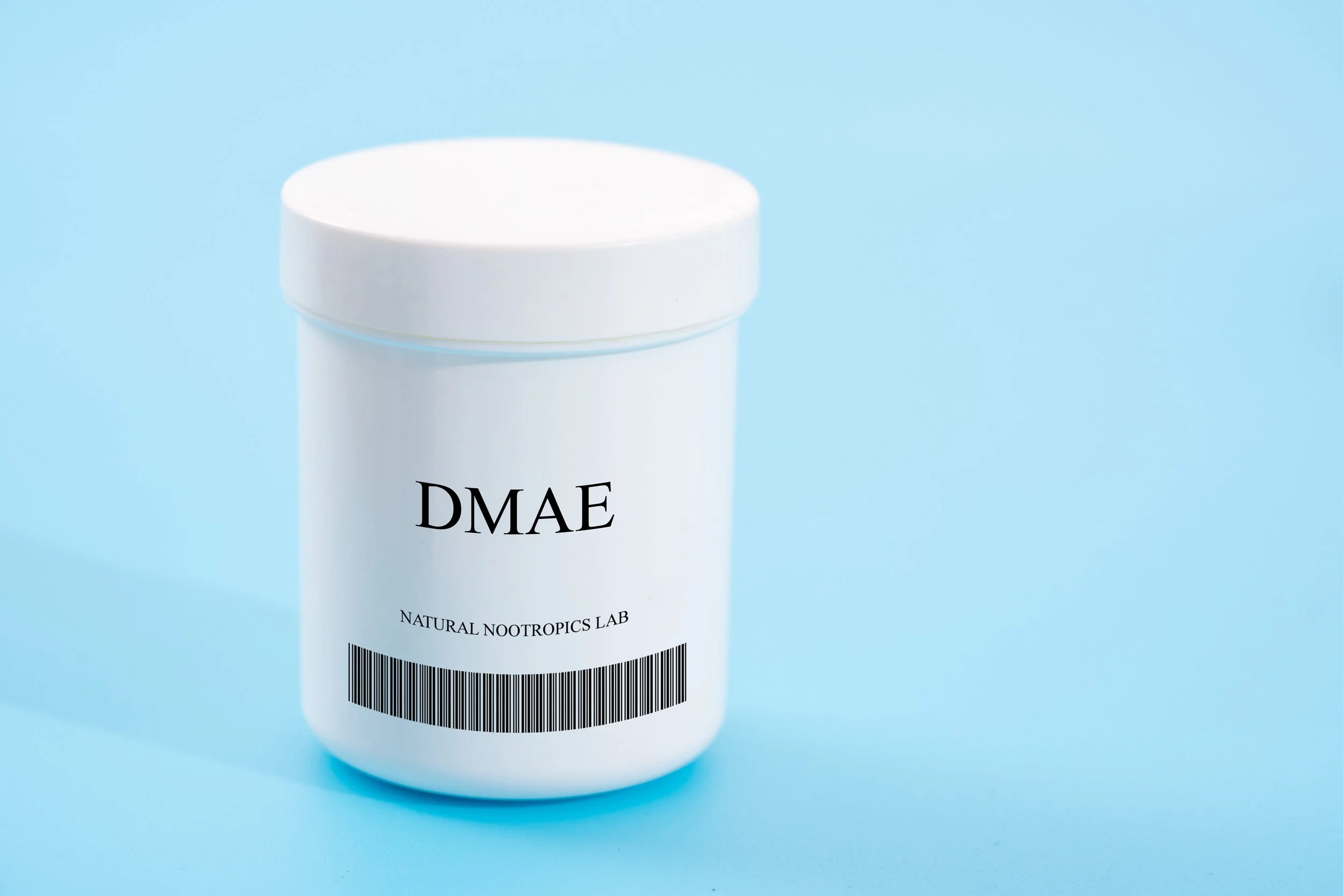
DMAE (dimethylaminoethanol)
The role of dimethylaminoethanol in cosmetic dermatology.
DMAE (dimethylaminoethanol) is an organic compound naturally produced in the brain and found in fatty fish like salmon. It may support the production of acetylcholine, a neurotransmitter involved in learning, memory, and muscle function.
Because of its role in brain signaling, DMAE is used as a supplement to improve cognitive and mental health functioning. As a dietary supplement or topical skincare ingredient, it is used to support cognitive function, enhance memory, and improve skin firmness and tone.
Skin tightening: Topically applied DMAE (usually in concentrations of 2%-3%) is celebrated for its ability to provide a visible, almost instant firming and lifting effect on sagging skin.
Reduces fine lines, depth of wrinkles, and improve the structure of aged skin. -Smooth rough skin.
Reduces photodamage, mottled hyperpigmentation, skin spots, and lesions.
Improve overall skin appearance.
Topical Estriol
Treatment of skin aging with topical estrogens.
Studies showed that after treatment for 6 months, elasticity and firmness of the skin had markedly improved and the wrinkle depth and pore sizes had decreased by 61 to 100% in both groups. Furthermore, skin moisture had increased and the measurement of wrinkles using skin profilometry revealed significant, or even highly significant, decreases of wrinkle depth in the estradiol and the estriol groups, respectively. On immunohistochemistry, significant increases in Type III collagen labeling were combined with increased numbers of collagen fibers at the end of the treatment period. As to hormone levels, only those of PRL had increased significantly and no systemic hormonal side effects were noted.
GHK-Cu
Regenerative and Protective Actions of the GHK-Cu Peptide
GHK-Cu use is Skin Restoration:
Tighten loose skin and reverse thinning of aged skin.
Repair protective skin barrier proteins.
Improve skin firmness, elasticity, and clarity. Reduce fine lines, depth of wrinkles, and improve the structure of aged skin.
Smooth rough skin.
Reduce photodamage, mottle hyperpigmentation, skin spots, and lesions.
Improve overall skin appearance.
Stimulate wound healing.
Protect skin cells from UV radiation.
Reduce inflammation and free radical damage.
Increase hair growth and thickness, enlarge hair follicle size.
Hyaluronic Acid
A key molecule in skin aging
The key molecule involved in skin moisture is hyaluronic acid (HA) that has unique capacity in retaining water. There are multiple sites for the control of HA synthesis, deposition, cell and protein association, and degradation, reflecting the complexity of HA metabolism. The enzymes that synthesize or catabolize HA and HA receptors responsible for many of the functions of HA are all multigene families with distinct patterns of tissue expression. Understanding the metabolism of HA in the different layers of the skin and the interactions of HA with other skin components will facilitate the ability to modulate skin moisture in a rational manner.
NAD+ (nicotinamide adenine dinucleotide)
NAD+ Role in Skin and Cellular Health
NAD+ is a vital coenzyme that powers skin cell regeneration, fuels DNA repair from UV damange and supports collagen production. Because natural NAD+ levels decline with age and sun exposure, restoring it through targeted skincare or supplements improves skin firmness, hydration, and elasticity while minimizing fine lines.
DNA Repair: Skin cells face daily DNA damage from UV radiation. NAD+ acts as the primary fuel for PARP enzymes, which identify and repair this cellular damage before it manifests as wrinkles or pre-cancerous lesions.
Collagen & Elastin Synthesis: NAD+ is required to activate "longevity proteins" called sirtuins (like SIRT1 and SIRT6). These proteins promote collagen gene expression and block enzymes that break down the skin's structural support matrix.
Antioxidant & Barrier Protection: NAD+ drives the mitochondria to produce cellular energy (ATP), which is necessary for faster cell turnover and maintaining a strong skin barrier. It also enhances the skin's natural antioxidant systems, actively reducing oxidative stress and inflammation.